
Beenleigh Aquatic Centre Stage 2 | Logan, QLD
Stage 2 of the Beenleigh Aquatic Centre redevelopment brings together architecture, landscape architecture and wayfinding by MODE, completing the transformation of the site into a contemporary aquatic and recreation precinct.
Client: City of Logan
Location: Beenleigh, QLD
MODE Expertise: Architecture, Landscape Architecture, Wayfinding
Project Team: Greg Brown, Troy Matheson, Allan Winchcole, Connor Evers
Completion Date: May 2026
Beenleigh Aquatic Centre Stage 2 | Logan, QLD
Stage 2 of the Beenleigh Aquatic Centre redevelopment brings together architecture, landscape architecture and wayfinding by MODE, completing the transformation of the site into a contemporary aquatic and recreation precinct.
Delivered as part of the SEQ City Deal, the project represents a significant investment in community infrastructure, extending the role of the centre beyond a traditional aquatic facility into a broader destination for health, recreation and everyday use.
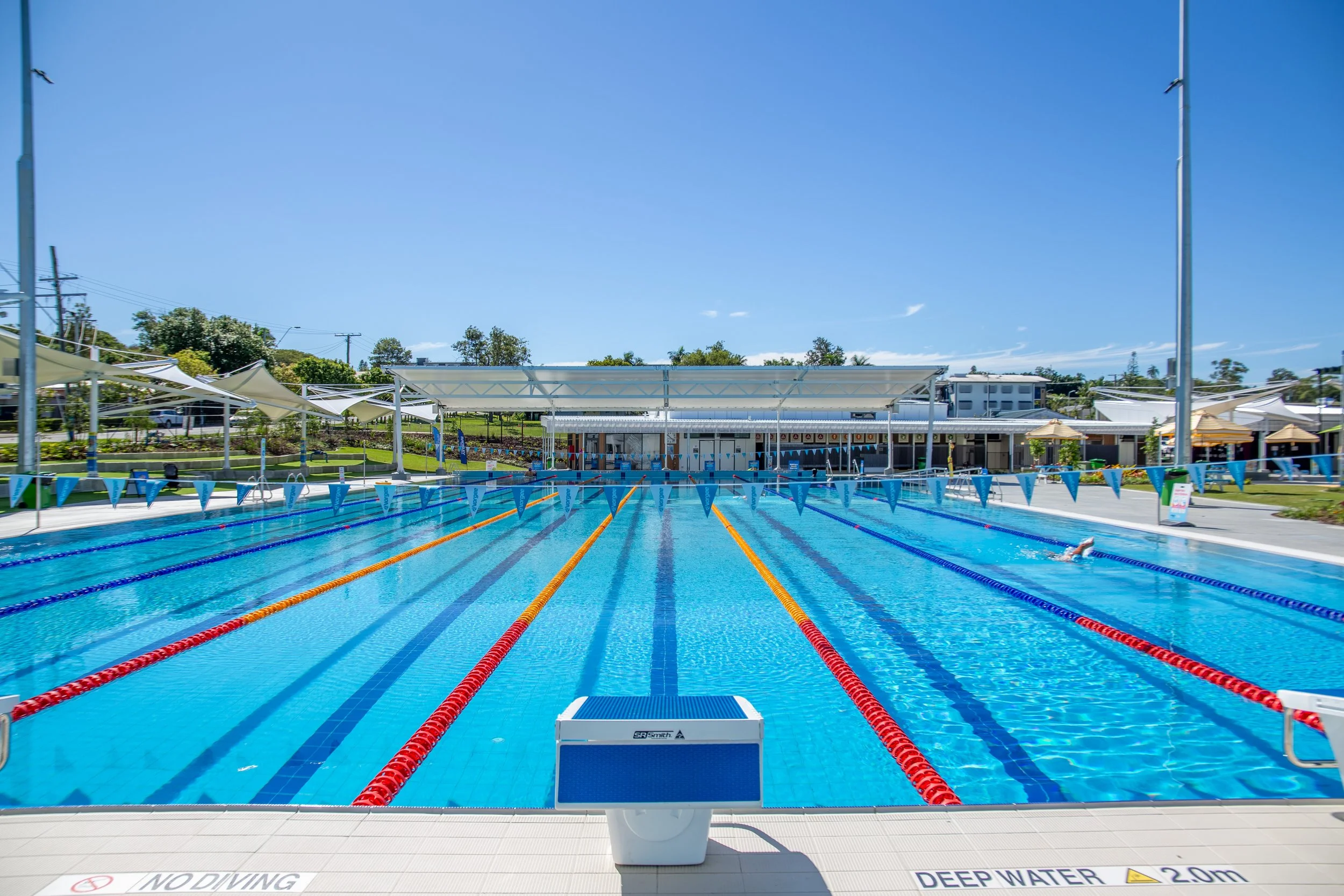
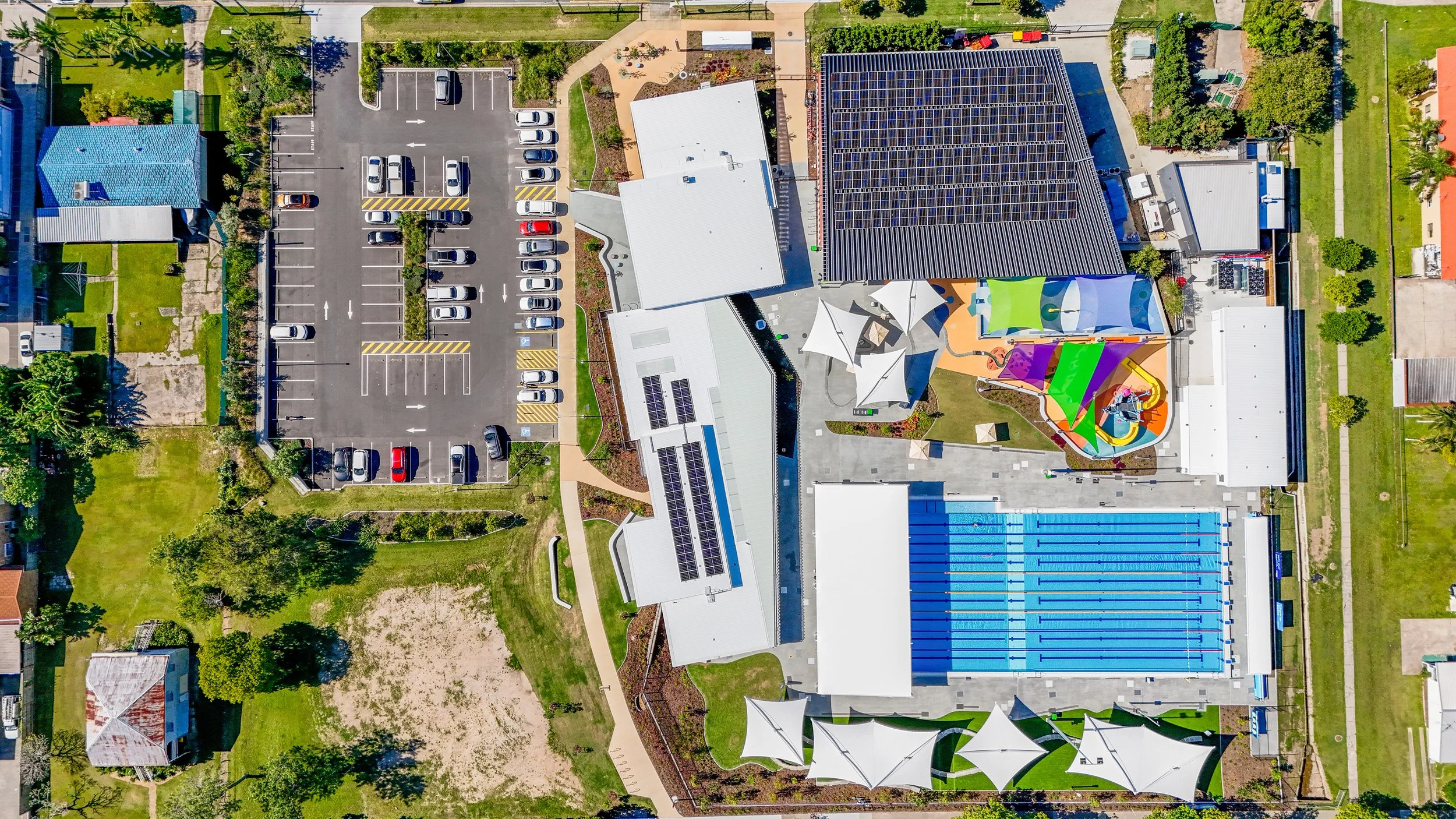
At the core of the redevelopment is a new Olympic-sized outdoor pool, supported by upgraded amenities and a reconfigured public realm. The design establishes a strong relationship between built form, landscape and movement, integrating aquatic functions within a connected parkland setting. A clear pedestrian axis links surrounding streets and adjacent community assets, improving legibility and reinforcing the precinct as part of a wider recreational network.
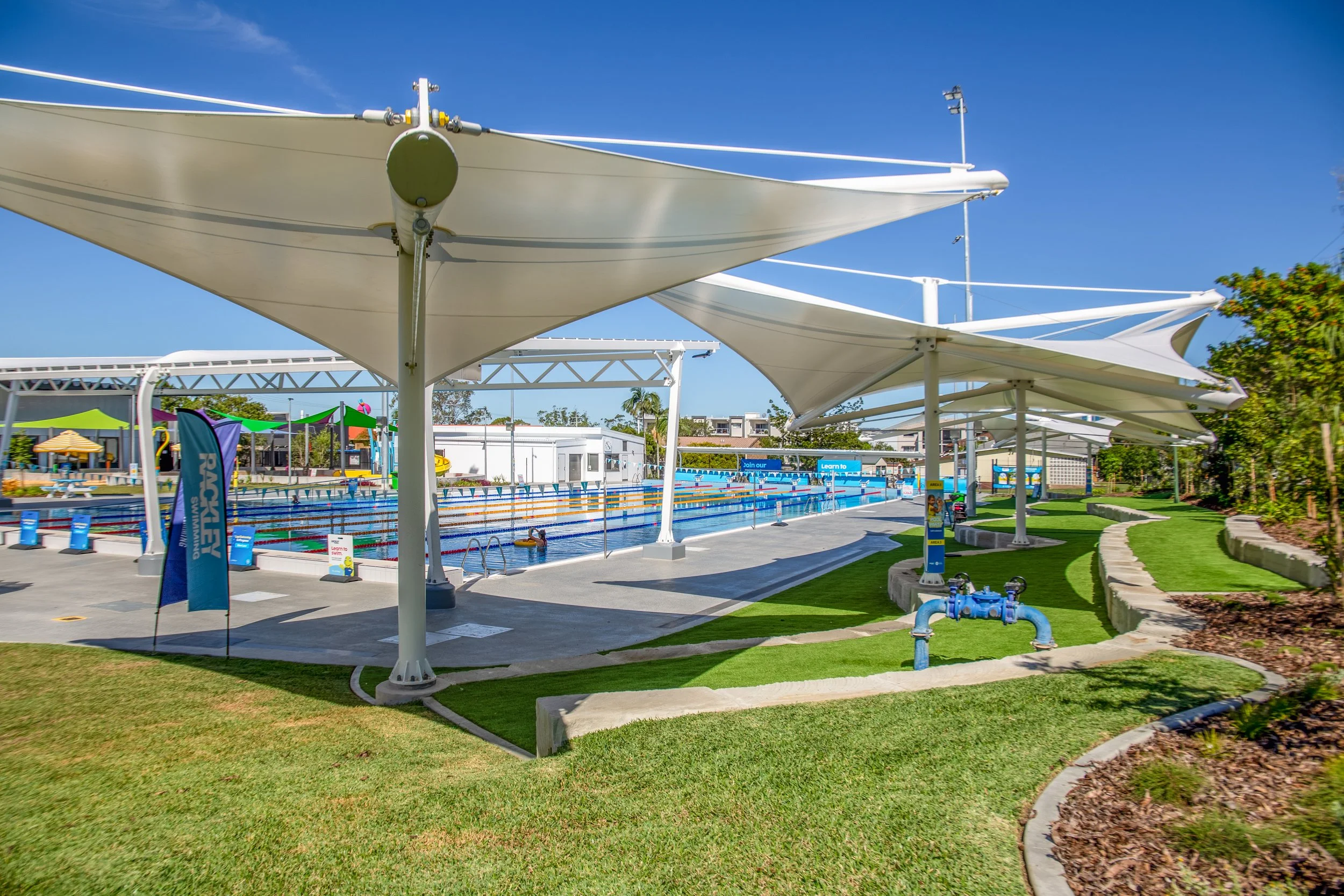
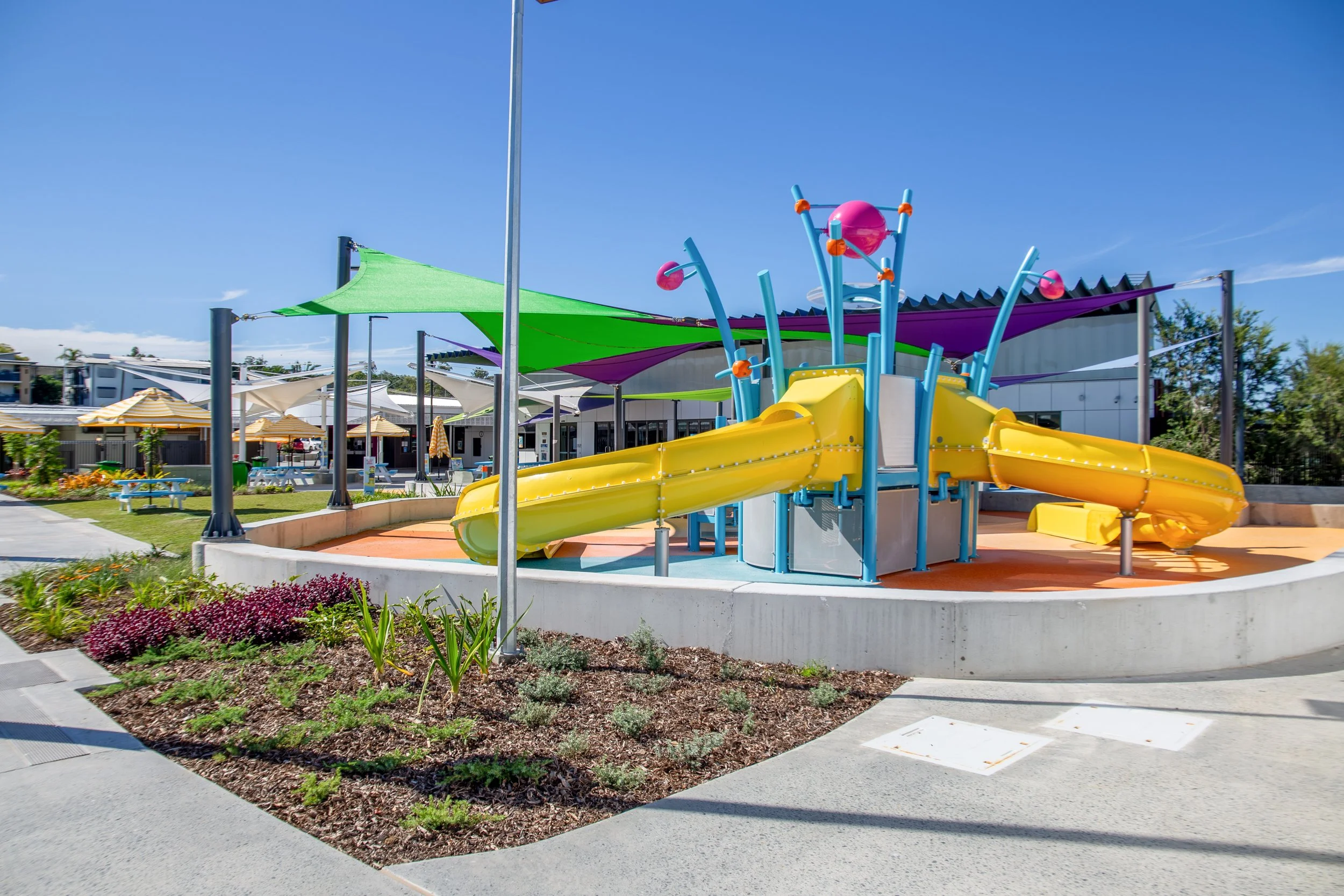
The landscape strategy plays a central role in shaping the user experience. Generous planting and a strengthened green canopy respond to the local microclimate, improving comfort and contributing to urban cooling. The design draws on the form of the nearby Albert River as a unifying element, informing seating, circulation and play spaces to create a cohesive and legible public realm.
Environmental strategies are embedded throughout, including photovoltaic solar panels, water harvesting and recycling systems, energy-efficient pool infrastructure, and passive heating and cooling. Subtropical design principles are reinforced through native planting and waterwise landscaping, while material selections prioritise durability and low-emission outcomes.
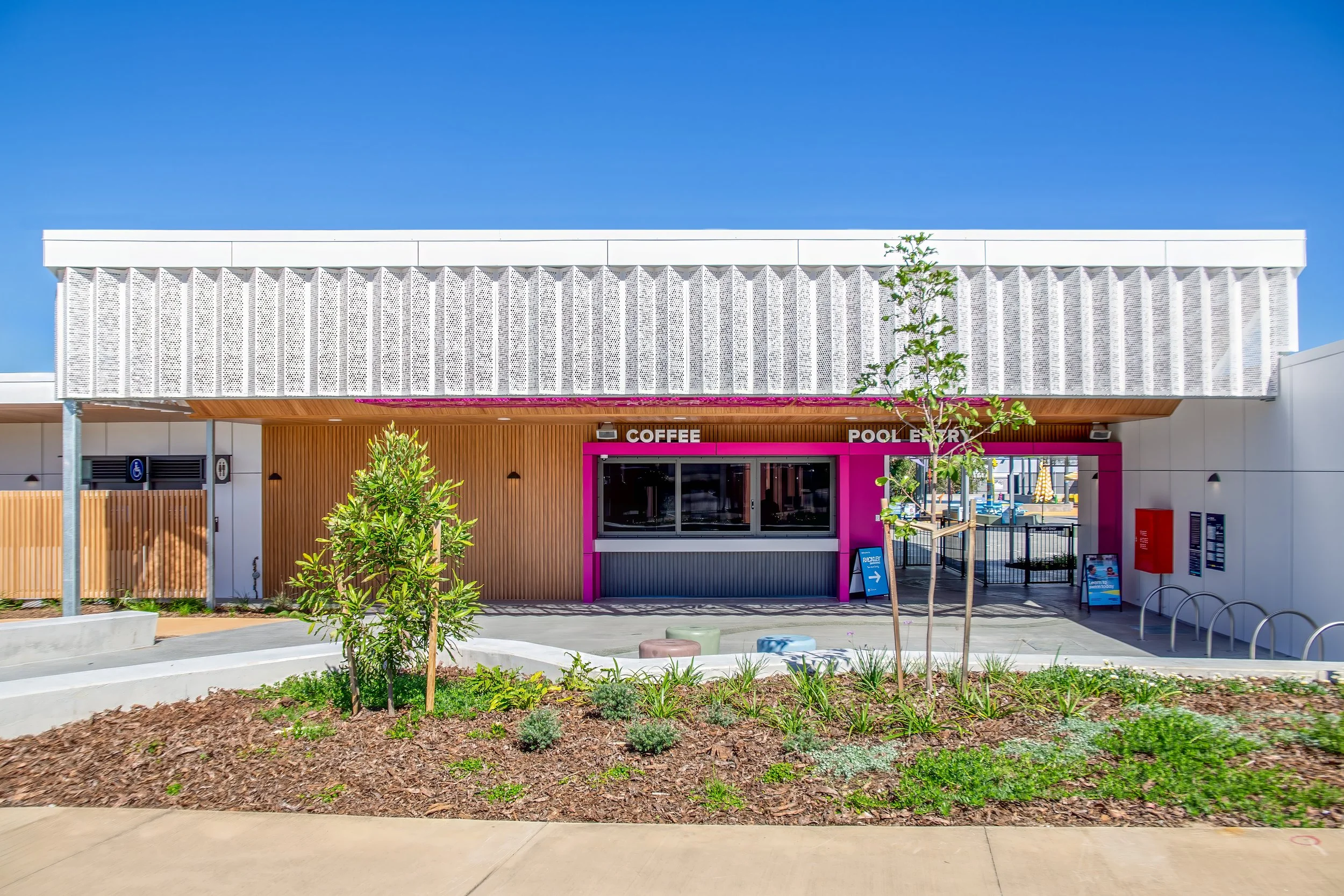
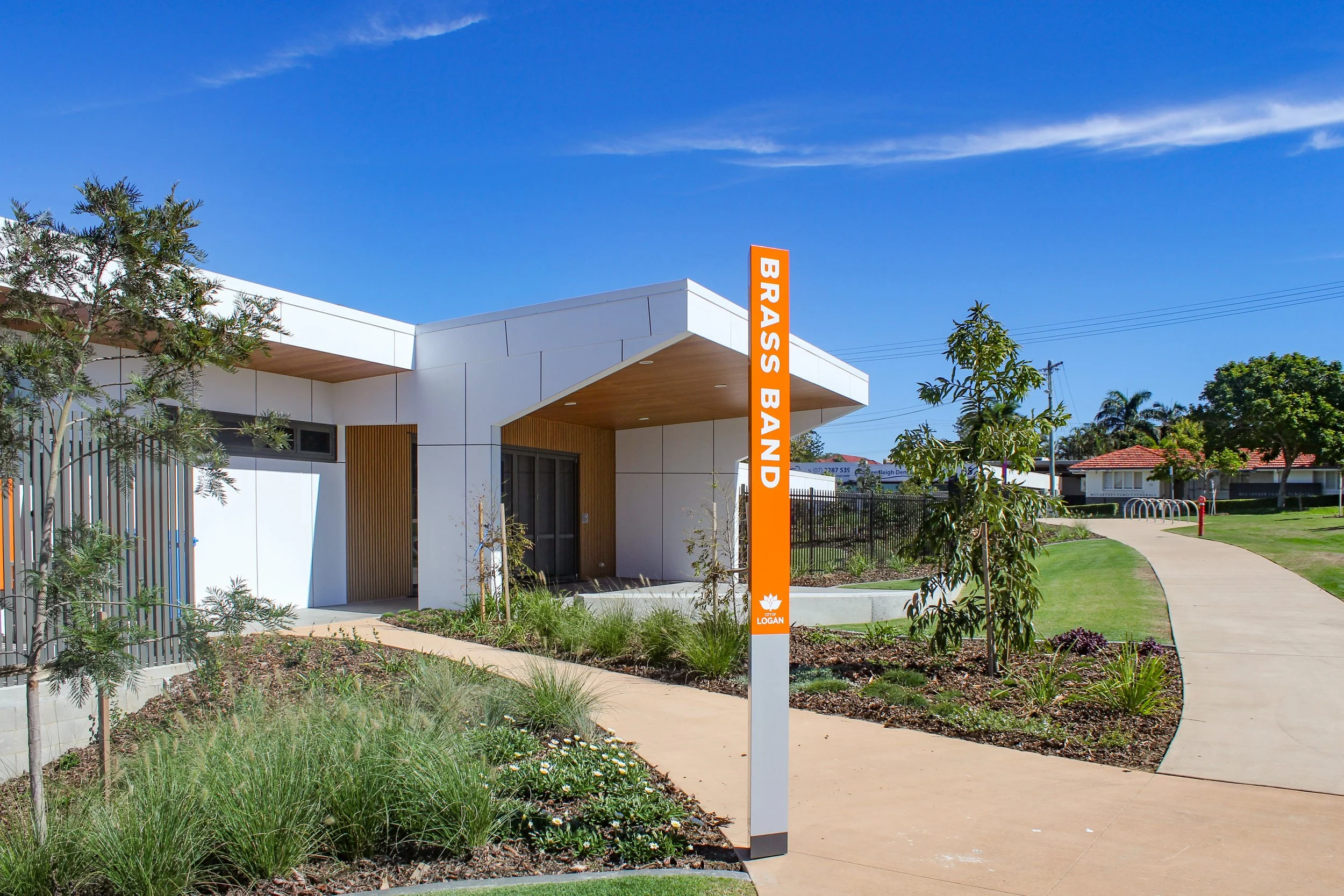
Accessibility and clarity underpin the planning of the precinct. A coordinated wayfinding strategy supports intuitive navigation, with integrated graphic elements reinforcing local identity and creating clear points of orientation across the site.
Rather than being applied as separate layers, architecture, landscape and wayfinding have been developed as a single, coordinated system. This integrated approach strengthens how the precinct is experienced, supporting movement, usability and connection at every scale, and reflecting MODE’s CONNECTED By Design philosophy through the way disciplines, spaces and people are brought together.