
Molecular Diagnostic Facility | Berrimah Farm, NT
A world-class facility for agricultural biosciences research and development.
Client: Department of Infrastructure, Planning & Logistics
Location: Berrimah Farm, NT
MODE Expertise: Architecture, Interior Design
Completion Date: 2021
AWARD
2022
Australian Institute of Architects (NT)
Commercial Architecture Award
Molecular Diagnostic Facility | Berrimah Farm, NT
MODE designed the new Molecular Lab a world-class facility for agricultural biosciences research and development.
The Molecular Laboratory is able to accommodate 50 staff and provide enhancing capacity for preparedness, rapid detection, response and management of plant and animal pest and disease outbreaks, to reassure trading partners and protect the Northern Territory’s agricultural sector; Improved efficiency of research and development programs and services; and attract and retain leading national and international scientists and collaborators.
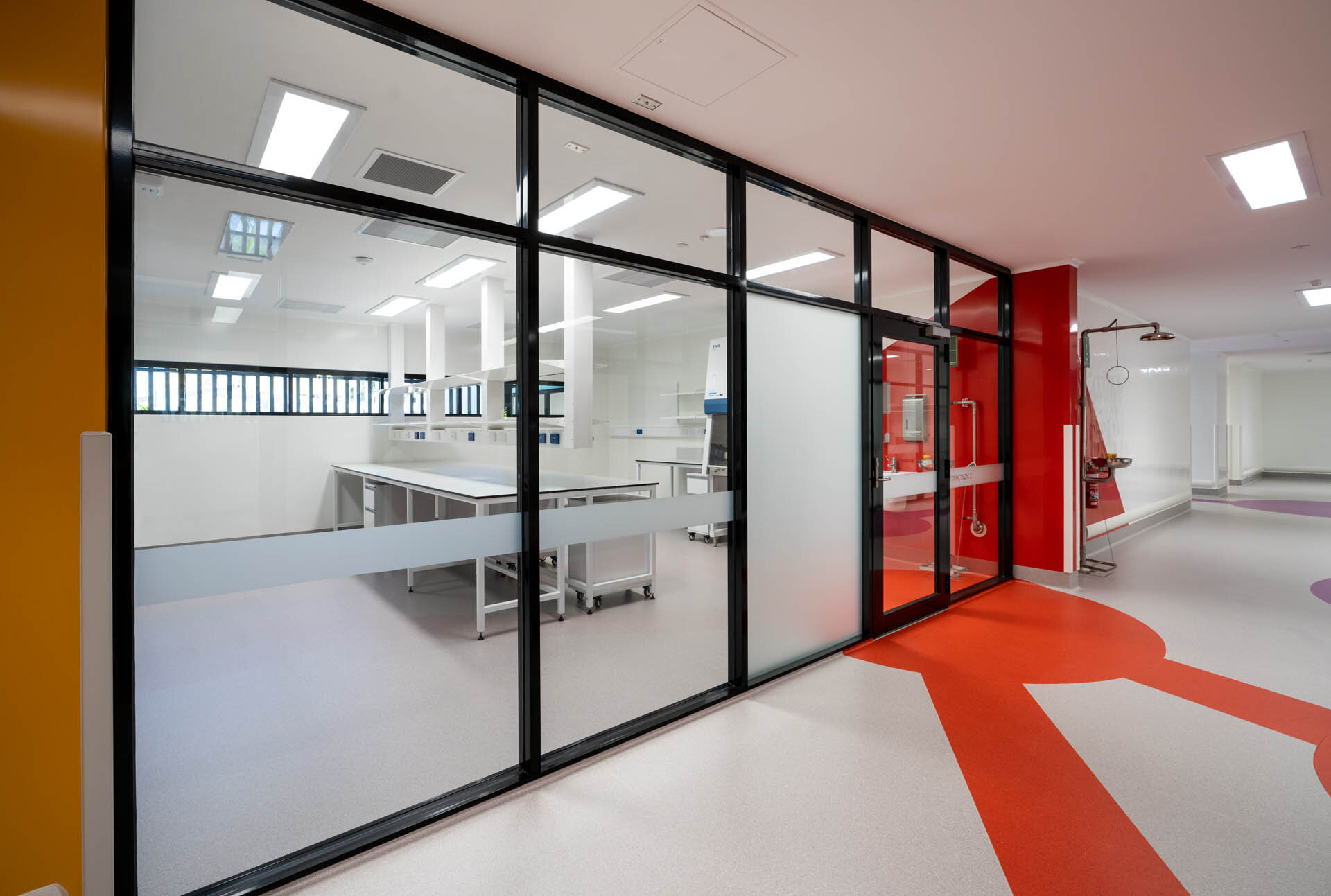
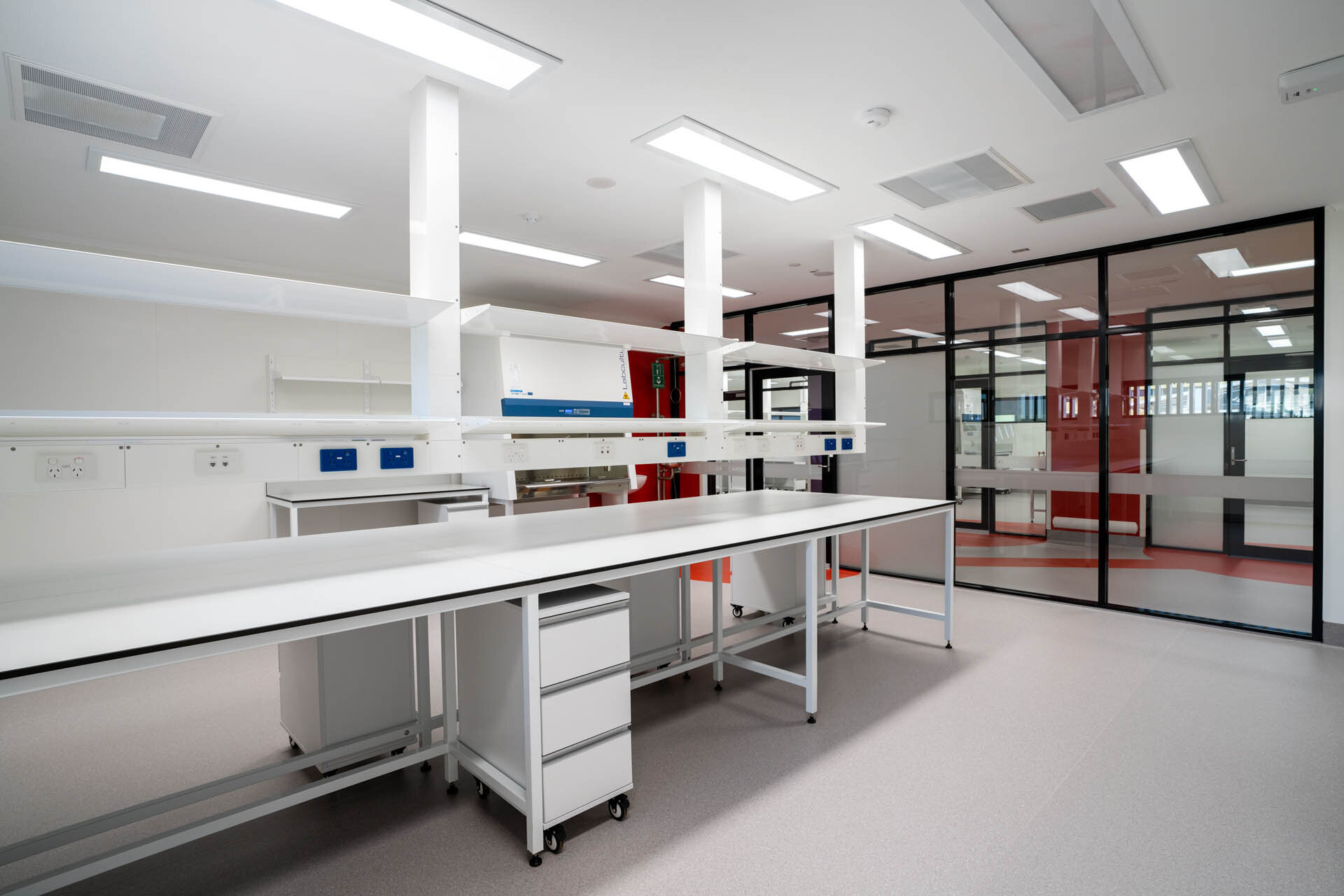
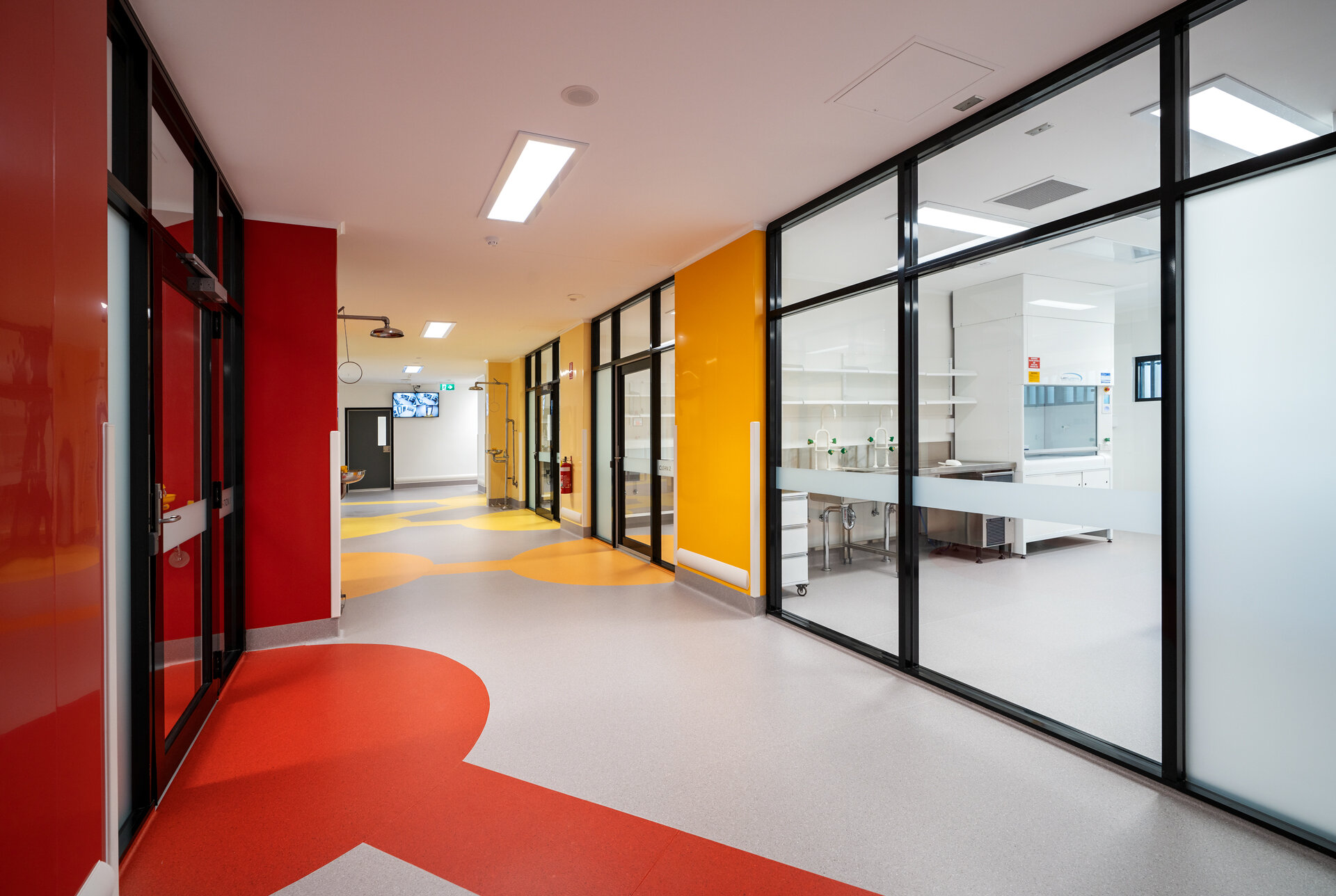
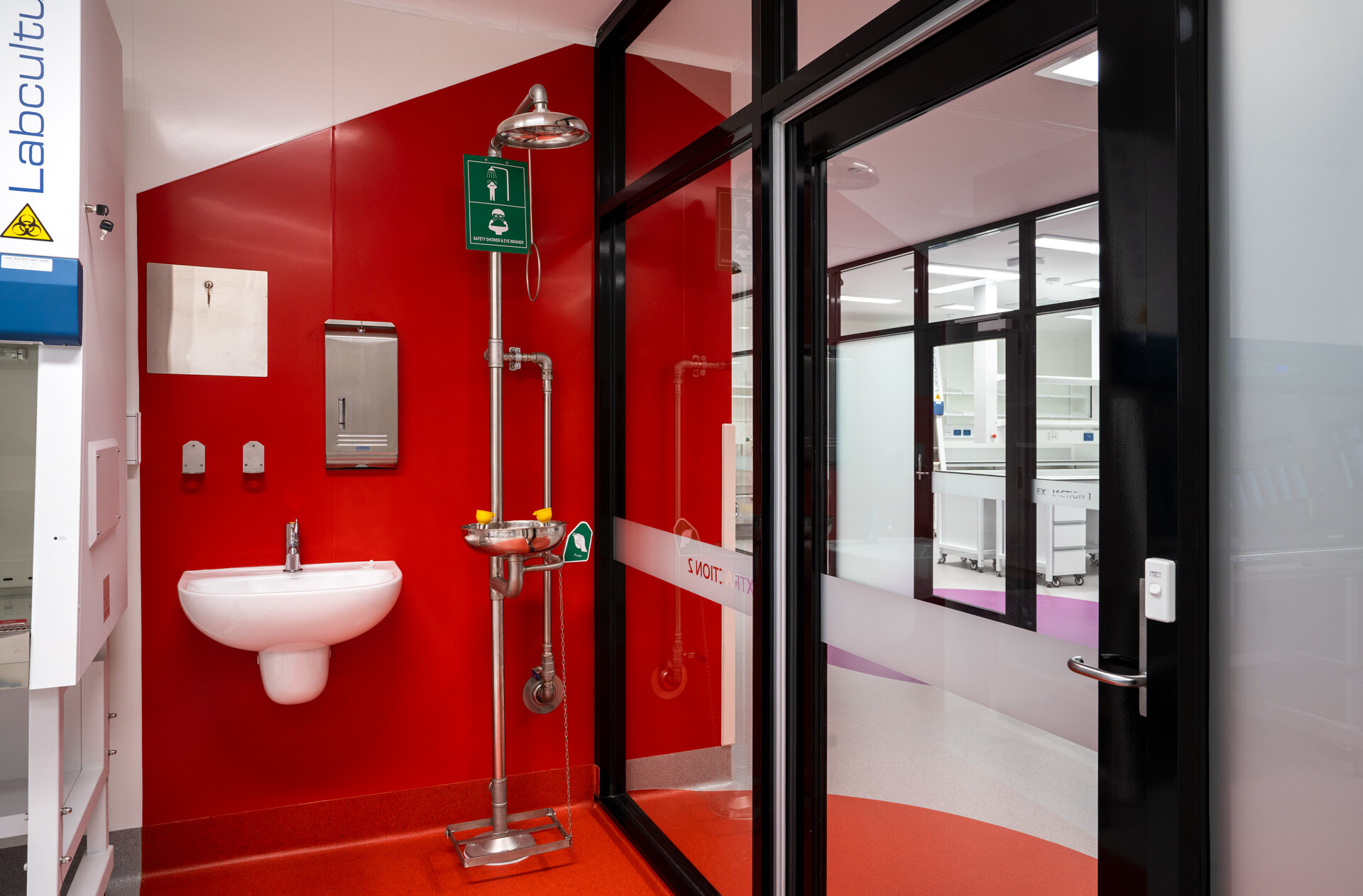
Designed as a new building with refurbishments/upgrades to the existing to meet current standards, the facility addresses the personal safety risks to staff and the overall containment of the facility in accordance with current standards. The facility was designed to attain PC2 level rating under both AQIS/DAFF and OGTR as a minimum with a contained BCS.3 laboratory space accessed through the PC2 laboratory areas.
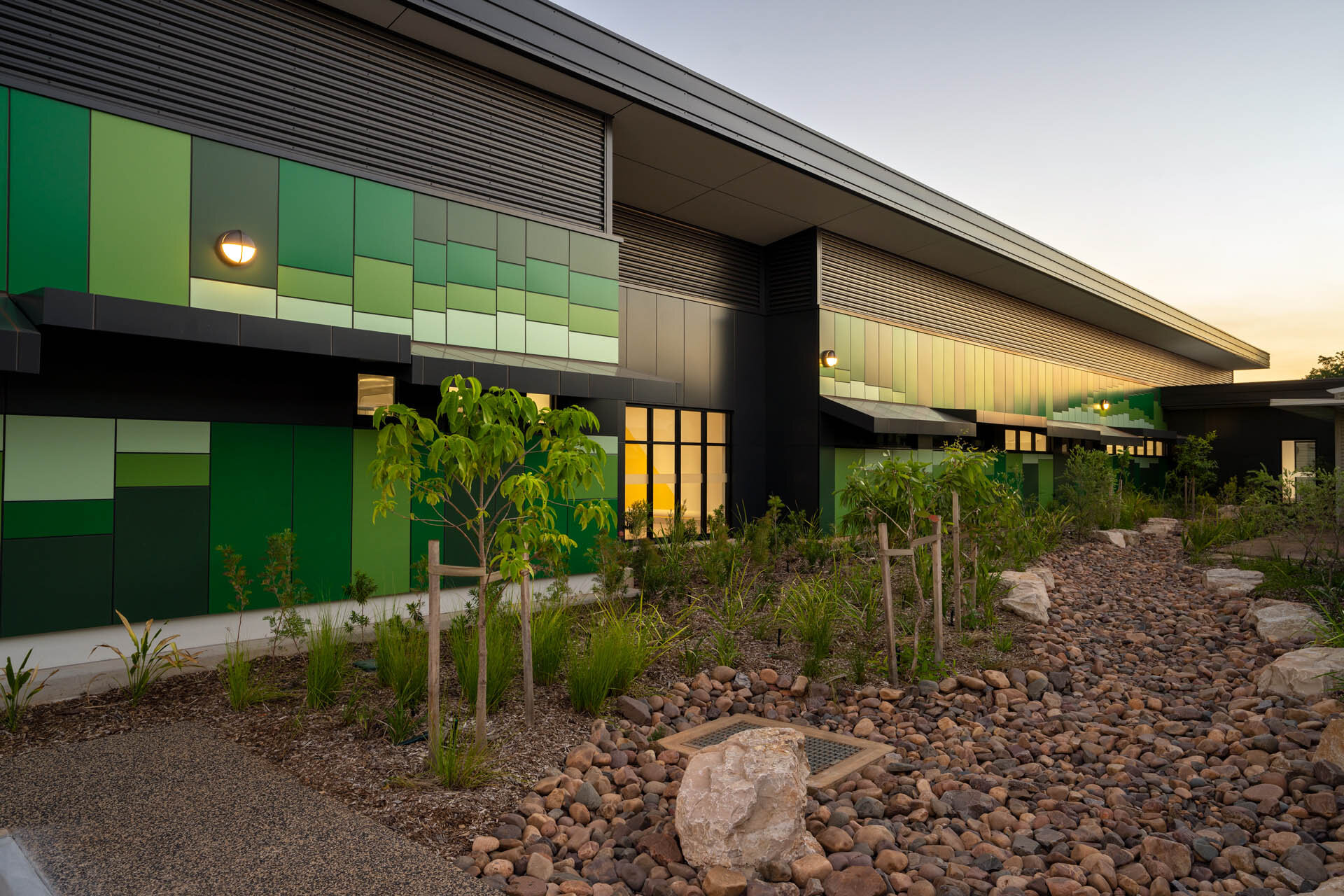
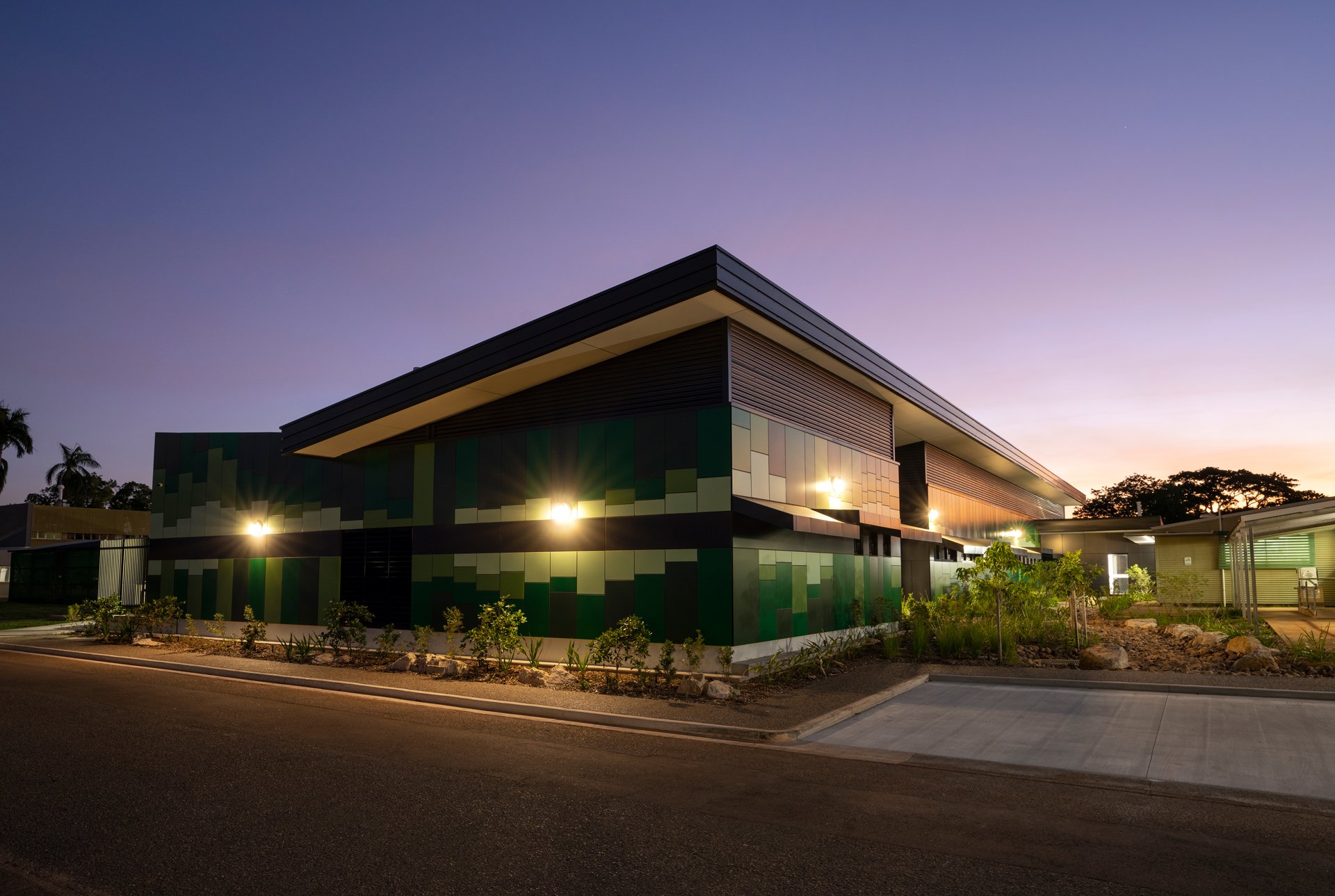
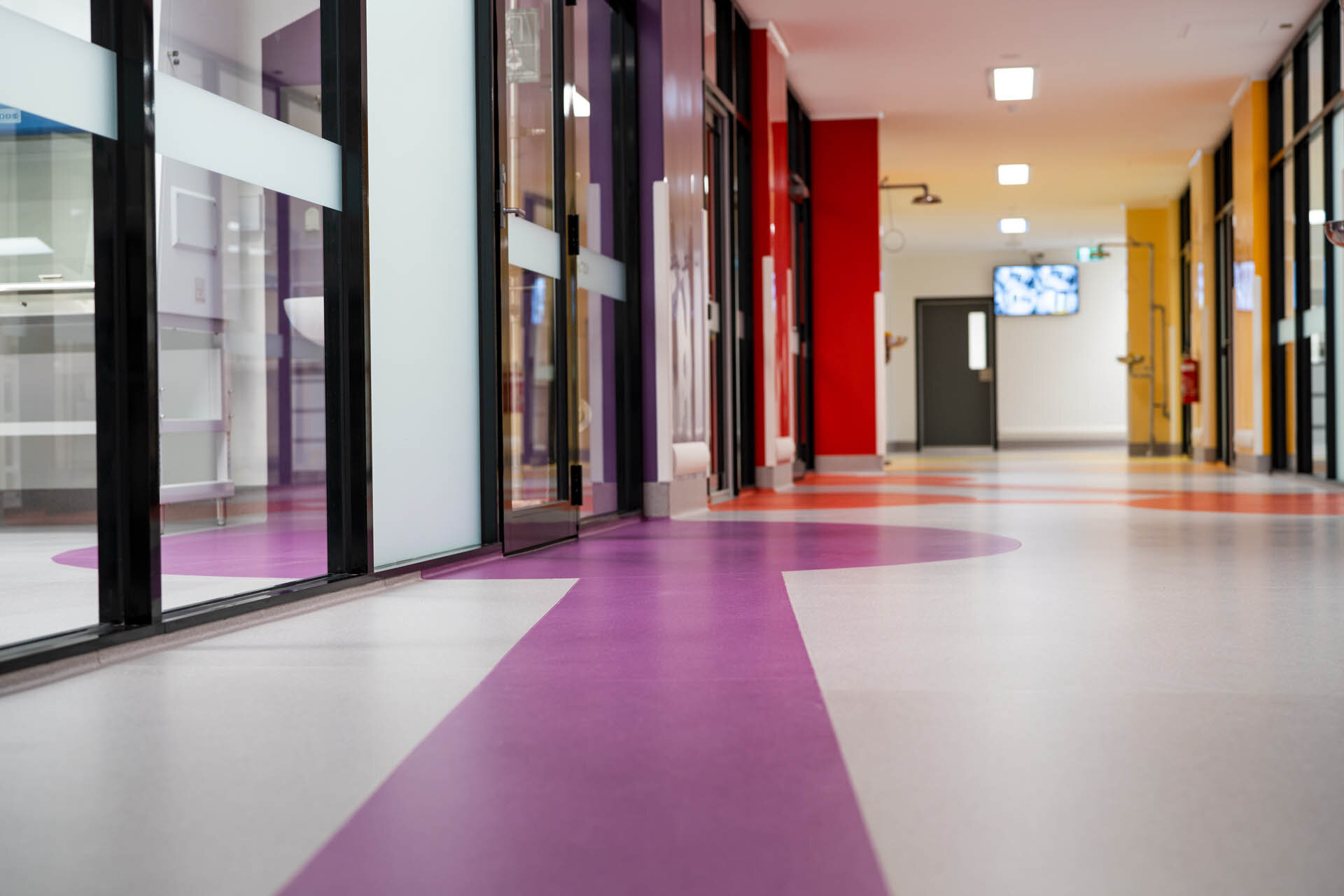
The layout of the facility was tailored to suit the current work flows of end-users and also gives scope for these spaces to be laid out to support change to specialist spaces, different research group sizes and configurations. The high level of technical complexity within the building was mirrored in the external façade, with various laboratory graph results extruded into the colour selections for the external façade of the building, and also extended into the building elevations. The internal concept draws on representations of chemical bond symbols to express the use of the facility on a graphic level.
The project required special attention to the staging of the works to allow for the decanting and decommissioning of existing facilities once the new molecular wing has been commissioned.
The building master plan has been considered for future expansion and flexibility, maximising opportunities for growth and extension of services once funding is in place for future works. The development was delivered in stages to allow for core functionality and operation throughout the works, providing minimal disruption to current operations.